
Tan
Beef tongue
Tongue
- Texture
- Firm and springy; thickness changes the bite.
- Flavor
- Savory, with a gentle fatty sweetness.
Say the menu name, recognize the cut, and find the texture you enjoy. Romanized Japanese names and English explanations for yakiniku and yakitori.
Illustrations show approximate regions. Restaurant names, trimming, thickness and cooking change the experience; flavor descriptions are general pointers.
52 cuts, shown as grilled servings. Images are AI-generated serving illustrations; actual cuts and plating vary by restaurant.
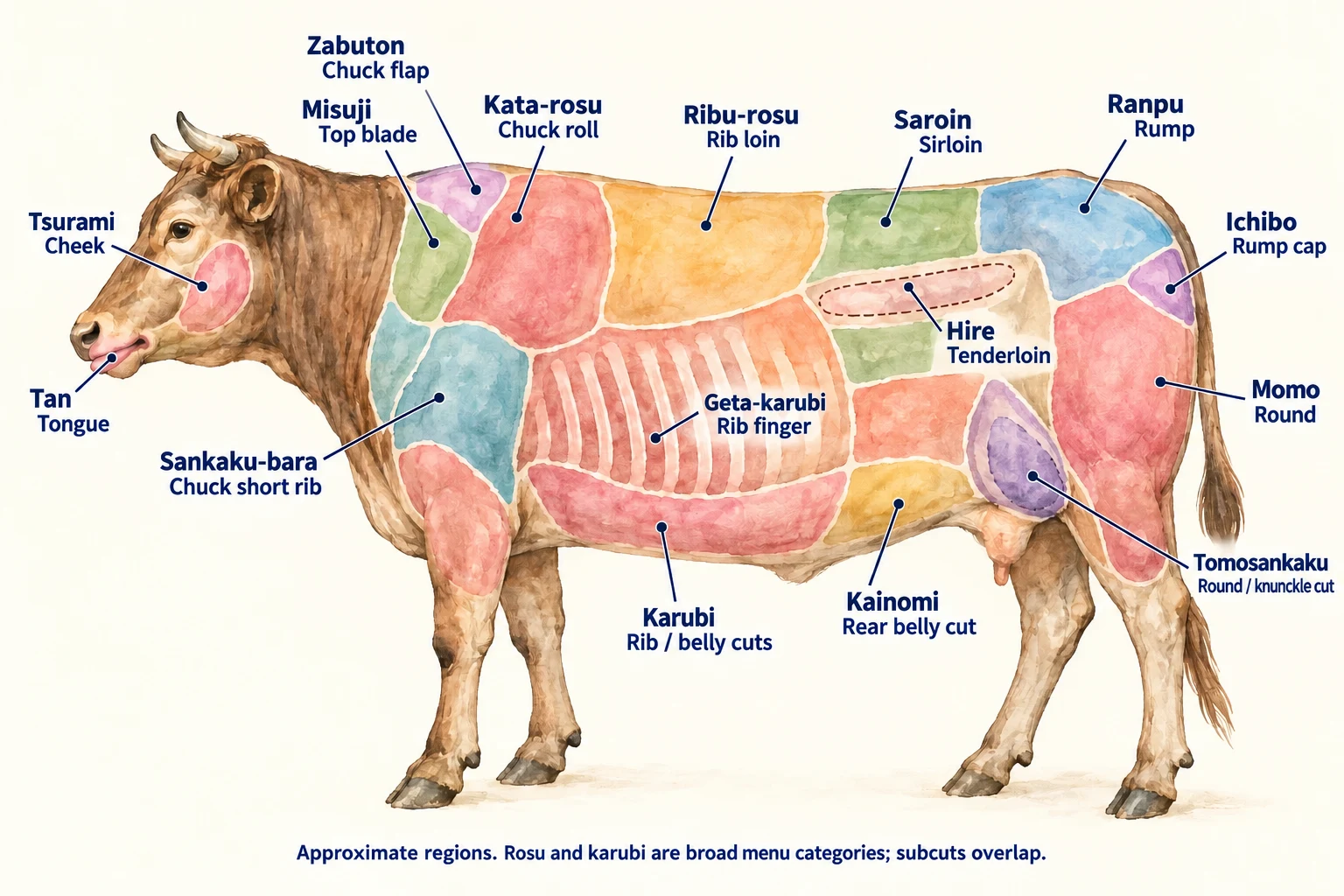
Karubi and rosu are menu categories. Their exact cuts vary by restaurant. Harami looks like regular red meat but is diaphragm muscle, often listed with horumon (offal). Check the description rather than assuming every name matches a single Western cut.
Tongue

A menu category commonly associated with rib and belly meat.

A broad restaurant name, rather than one universal anatomical cut.

An internal muscle beneath the rear part of the spine.

Upper rear / rump region.

Upper hind leg; includes several different muscles.

Shoulder end of the back; a more specific rosu cut.

Back around the ribs.

Rear loin along the back.

Outer rump; international cut names vary.

Marbled part of shoulder loin.

Shoulder blade area.

Rear belly near the tenderloin.

Part of the shintama (knuckle) in the upper hind leg; also called hiuchi. English cutting terms vary.

Rib meat near the front chest.

Between the ribs; also called naka-ochi.

Cheek muscle.

Thick central portion of tenderloin.

Diaphragm muscle; usually grouped with offal on Japanese menus.

Liver; English menus may use the ingredient name rather than reba.

Heart muscle.

The first of the cow’s four stomach compartments.

Large intestine; one of the cuts sold as horumon.

Another diaphragm portion, distinct from harami.

Second stomach compartment.

Third stomach compartment.

Fourth stomach compartment; also called akasenmai.

Small intestine; maru-cho often means unsplit preparation.

A fatty portion of the first stomach.

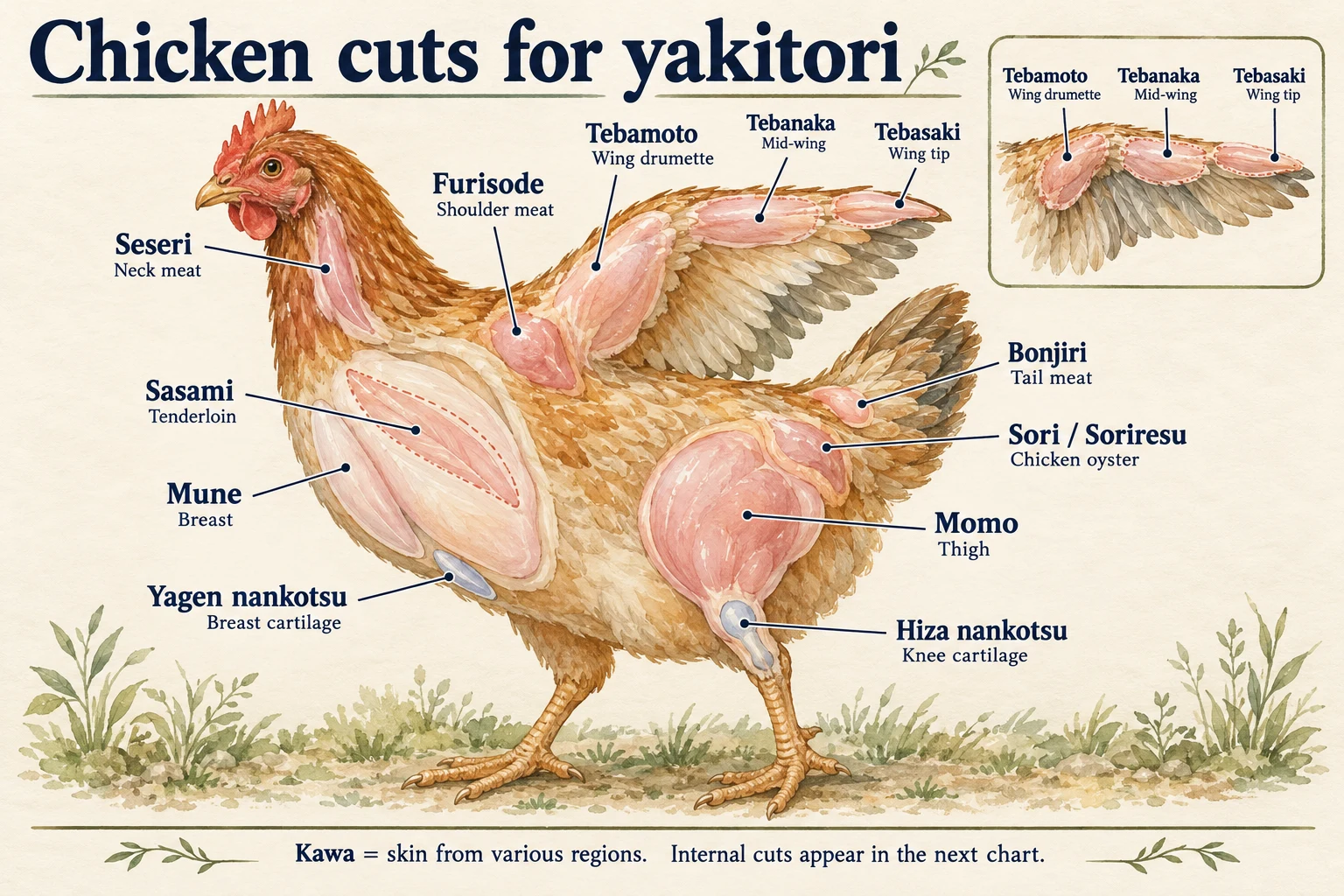
Upper leg.

Breast muscle.

Small inner breast muscle.

Muscles around the neck.

Outer wing segment; some menus use tebasaki for a larger wing portion.

Meat around the base of the tail; also called sankaku.

Skin from various parts; not one isolated muscle.

Cartilage near the tip of the breastbone.

Upper wing near the shoulder.

Middle wing segment.

Between breast and wing; trimming varies.

Small muscles near the thigh attachment on the back.

Cartilage near the knee joint.
Chicken harami is abdominal-wall meat, unlike beef diaphragm. Shiro-gimo is a liver selection; chochin is a combination skewer. Rare names and availability vary by shop.

Muscular part of the digestive tract. Sunazuri is a common Kansai menu name.

Heart; some menus use the English word heart.

Liver; kimo is another menu name.

Thin abdominal muscle; different from beef harami, which is diaphragm.

Tissue and vessels near the heart; shops also say kokoro-nokori.

Usually esophagus and/or trachea; ask which the shop serves.

Kidney tissue along the back.

Developing yolks from a hen, before shell formation.

Preparation combining unlaid yolks with reproductive tissue; not a single muscle.

A fattier liver selection, rather than a separate organ.
At many yakiniku restaurants, small plates of sliced meat arrive for you to cook on a tabletop grill. Other restaurants cook for you, so check the setup when you sit down. A meal can move between lean cuts, marbled beef, tongue, vegetables and horumon, rather than centering on one large steak.
Order a few plates first and compare the cut, thickness and seasoning. A highly marbled slice feels quite different from lean rump, even when both are described as tender. Rice, soup and vegetables can turn a succession of small plates into a complete meal. Portions, minimum orders and set contents vary by restaurant.
Yakitori puts different chicken cuts on skewers, usually grilled by the kitchen and served ready to eat. The interest lies in the changes of texture: juicy thigh, springy neck, crisp skin and crunchy cartilage. A specialist shop may offer cuts that rarely appear in a supermarket.
You may choose each skewer, order a mixed plate, or follow a chef’s course. Salt seasoning and sweet-savory sauce create different experiences of the same meat. Some shops also grill vegetables or other meats; read the individual item rather than assuming everything on a skewer is chicken.
For a first yakiniku order, try one lean cut, one richer cut and something with a firmer bite, such as tongue. At a yakitori shop, thigh, neck and skin make an approachable comparison. Add one unfamiliar item at a time, so you can connect its name with the texture you just tried.
These are tasting ideas, not a required order. If an ingredient or texture does not appeal to you, use the cut descriptions to choose an alternative.
At a self-grill yakiniku table, leave space between pieces and ask the staff about thick cuts or unfamiliar offal. Separate the utensils used for raw meat from those used for eating. Fatty pieces can cause flare-ups; ask for help with the grill rather than leaving a crowded batch unattended.
A thin slice and a thick piece need different treatment. There is no single grilling time that suits every cut, grill and thickness. Follow the restaurant’s guidance.
With yakitori, ask whether the shop recommends shio (salt) or tare (sauce). Try a bite before adding table condiments. At yakiniku, meat may arrive already seasoned; dipping sauce is another choice, not something that every slice needs in the same amount.
Some menus offer lemon, wasabi, chili or other condiments. Ask what goes with your order, especially if you want a milder flavor or need ingredient information.
Yakitori can be eaten directly from the skewer. If you prefer to remove the pieces, use your chopsticks and plate carefully. For sharing, ask how many skewers come in an order; ordering one for each person often makes the tasting simpler.
For a course, tell the staff about ingredients you cannot eat before it begins. “Mixed skewers” may include liver, cartilage or other offal. A dish name alone does not describe every ingredient or sauce.
Osaka’s tourism guide highlights the streets around Tsuruhashi Station as a gathering place for yakiniku restaurants. Exploring the neighbourhood gives the meal a setting: station streets, markets and restaurants close together, rather than a single destination restaurant.
You do not need to make every meal a famous-area visit. Use the Food restaurant searches to compare options near your own hotel or route, and treat Tsuruhashi as another part of Osaka to discover.
Osaka tourism: yakiniku & horumon ↗A gizzard skewer may appear as sunagimo or sunazuri. Sunazuri is a familiar Kansai menu name. Learning both helps you recognize the same firm, crunchy ingredient when two shops use different wording.
The aliases in this guide serve the same purpose. They help you ask a useful question, but they cannot guarantee identical trimming, portion size or seasoning across restaurants.
Zabuton is also the word for a floor cushion; on a beef menu it names a prized shoulder cut. Chochin means lantern and is used for a chicken skewer combining developing yolks and reproductive tissue. Sori / soriresu is the small cut often called a chicken oyster in English.
These vivid names can make a menu memorable, but an English translation alone may not tell you what you will receive. Match the name to the ingredient and texture description, then confirm with the shop.
Shio means salt seasoning. Tare is a sauce, often sweet and savory. Ask what the shop recommends for the cut.
Negima is chicken alternating with leek or scallion on a skewer. Tsukune is a seasoned minced-chicken skewer. These describe preparations, not anatomical cuts.
Check whether the menu price is for one skewer or a set. Start with a few different cuts, then order more of your favorites.
For yakiniku, ask how to cook unfamiliar cuts on the grill. Chicken and offal should be properly cooked; do not use appearance alone to judge doneness.