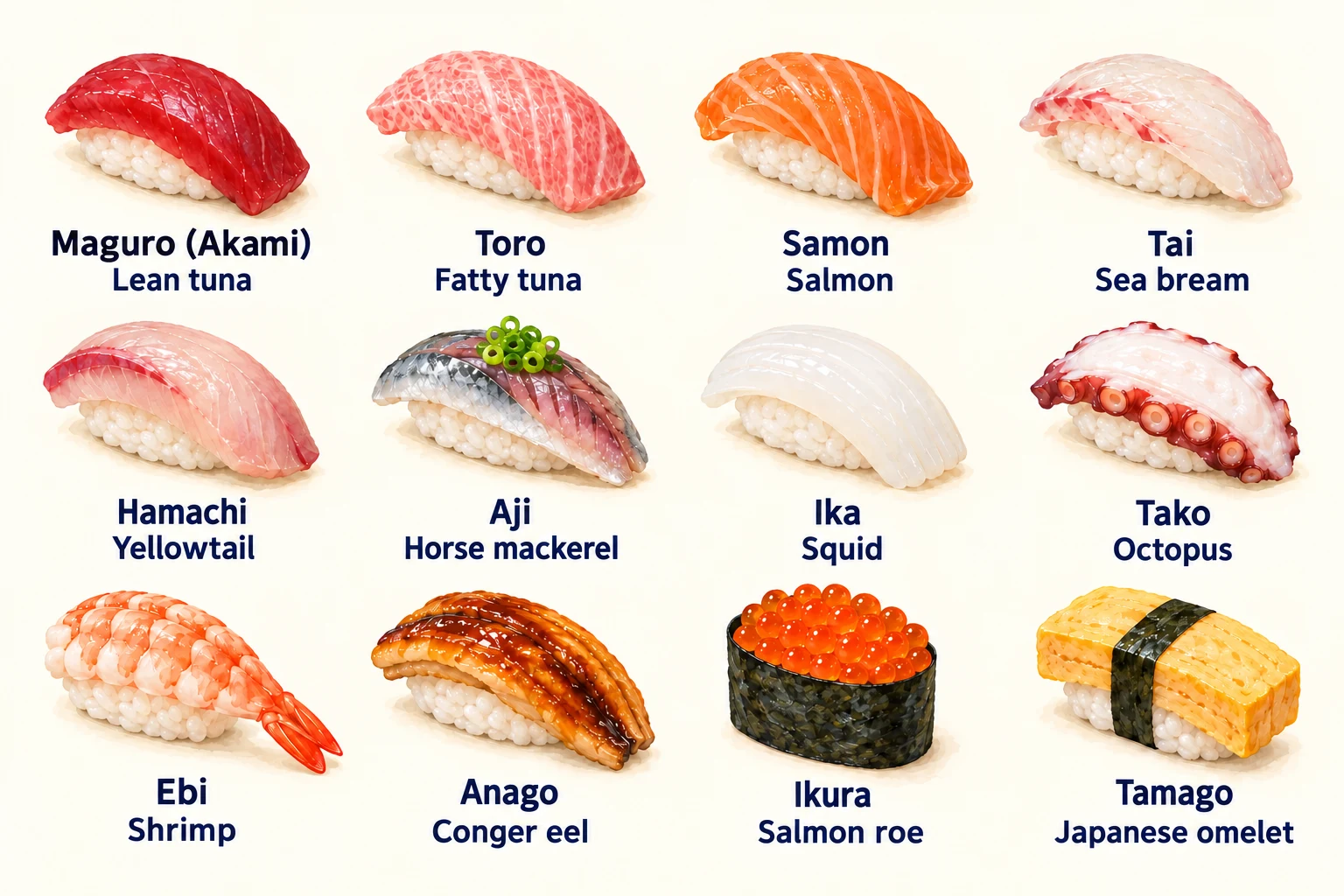
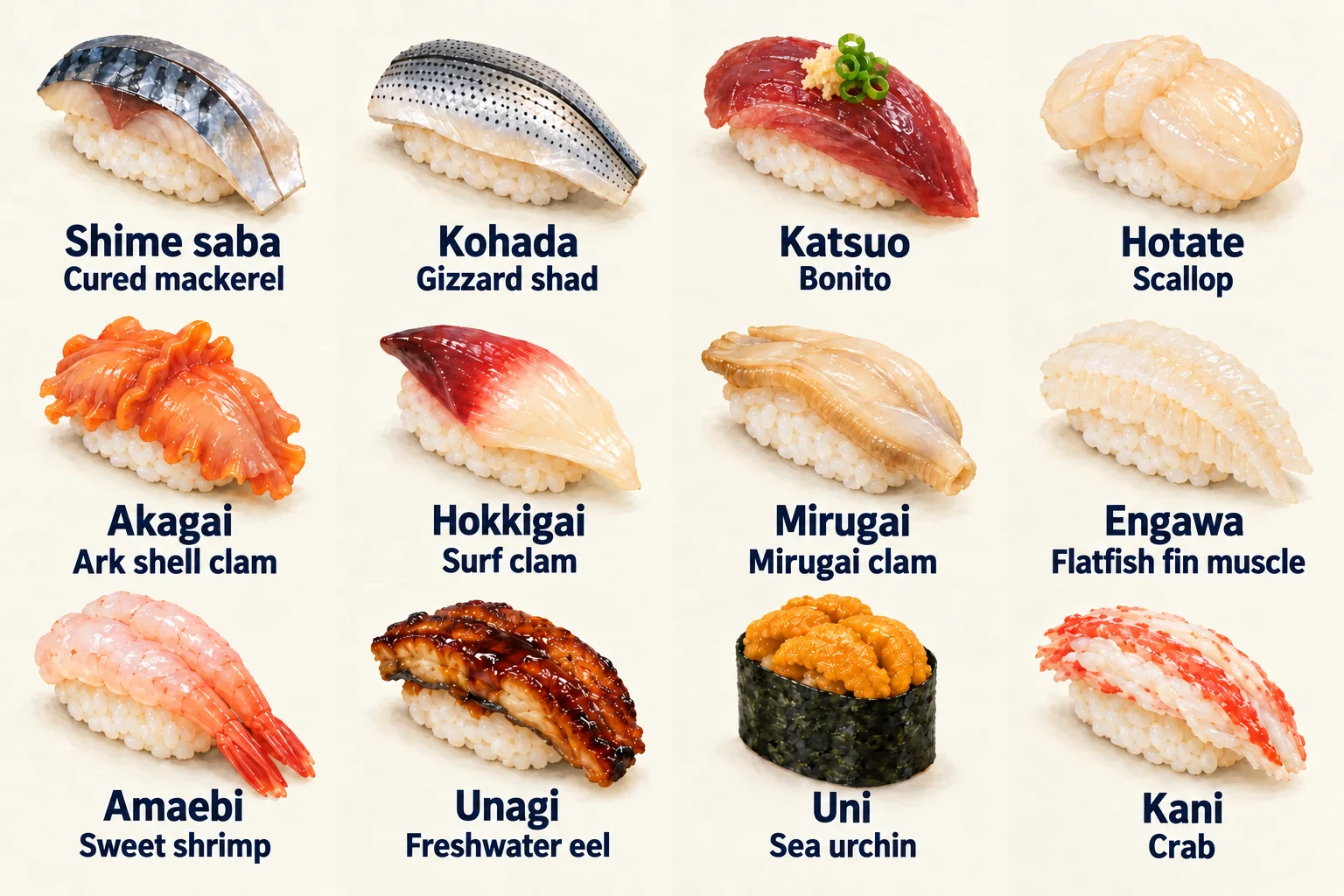
Recognize the topping, say its name, and choose the flavors you enjoy. A practical guide to classic nigiri, plus popular gunkan.
Illustrations are a guide to appearance, not restaurant photographs. Texture and flavor are general pointers: species, season and preparation make a difference.
24 toppings at a glance.
Romanized Japanese and English names are included in each illustration. Open a chart to zoom in, or read the individual cards below.
Classics 1–12 · Open the image to zoom ↗Classics 13–24 · Open the image to zoom ↗
What is on the rice?
The topping is called neta; the vinegared rice is shari. Use the Japanese names below to match a menu or show a card when ordering.
Maguro (Akami)
Lean tuna
Usually raw
Texture
Tender, with a clean bite.
Flavor
Savory and relatively lean; less buttery than toro.
Toro
Fatty tuna
Usually raw
Texture
Soft and buttery.
Flavor
Rich, with a pronounced fatty sweetness. Chutoro is medium-fatty; otoro is the richest cut.
Samon
Salmon
Usually raw
Texture
Soft and smooth.
Flavor
Rich and gently sweet, with noticeable fat.
Tai
Sea bream
Usually raw
Texture
Firm and springy when fresh; softer after aging.
Flavor
Delicate, mild and subtly sweet.
Hamachi
Yellowtail
Usually raw
Texture
Firm yet smooth.
Flavor
Savory and rich; fat varies with season and fish.
Aji
Horse mackerel
Usually raw
Texture
Tender, with a little firmness.
Flavor
A fuller fish flavor, often paired with ginger or scallion.
Ika
Squid
Often raw
Texture
Firm or gently chewy; scoring can soften the bite.
Flavor
Mild at first, then sweet as you chew.
Tako
Octopus
Often cooked
Texture
Springy and chewy.
Flavor
Mild, savory and gently sweet.
Ebi
Shrimp
Cooked version shown
Texture
Firm and springy when cooked.
Flavor
Light and sweet. This illustration shows cooked shrimp; amaebi is a different, usually raw option.
Anago
Conger eel
Usually cooked
Texture
Soft and delicate when simmered.
Flavor
Mild fish flavor with a sweet-savory glaze. Different from unagi, freshwater eel.
Ikura
Salmon roe
Usually cured roe
Texture
Small eggs that pop in your mouth.
Flavor
Salty, rich and briny. Usually served as a nori-wrapped gunkan, rather than plain nigiri.
Tamago
Japanese omelet
Cooked egg
Texture
Soft, sometimes fluffy or cake-like.
Flavor
Often sweet, with a savory egg or dashi flavor; recipes vary.
Shime saba
Vinegar-cured mackerel
Usually salt- and vinegar-cured
Texture
Firm, with a smooth, fatty bite.
Flavor
Rich fish flavor balanced by vinegar; curing strength varies.
Kohada
Gizzard shad
Usually salt- and vinegar-cured
Texture
Tender, with fine skin and a little firmness.
Flavor
Savory and tangy from the vinegar cure.
Katsuo
Bonito
Raw or surface-seared
Texture
Firm and meaty.
Flavor
Bold, lean and savory, often paired with ginger. A seared version is called tataki.
Hotate
Scallop
Often raw
Texture
Soft and plump, with a gentle bite.
Flavor
Mild and sweet.
Akagai
Ark shell clam
Often raw
Texture
Firm and pleasantly crunchy.
Flavor
Sweet and briny, with a distinctive mineral note.
Hokkigai
Surf clam
Blanched version shown
Texture
Firm, springy and slightly chewy.
Flavor
Sweet and savory. The red-purple tip usually indicates a blanched preparation.
Mirugai
Mirugai / geoduck-type clam
Often raw
Texture
Crisp and firm.
Flavor
Subtly sweet and briny. The Japanese menu name may cover different clam species; ask the shop for specifics.
Engawa
Flatfish fin muscle
Often raw; flatfish species vary
Texture
Firm, with a slightly crunchy, fatty bite.
Flavor
Mild and rich. It is the muscle along the fin, rather than a separate fish species.
Amaebi
Sweet shrimp
Usually raw
Texture
Soft, silky and slightly sticky.
Flavor
Delicate and sweet; different from the springier cooked ebi.
Unagi
Freshwater eel
Cooked
Texture
Soft inside, sometimes lightly crisp from grilling.
Flavor
Rich and fatty, usually with sweet-savory sauce; distinct from conger eel (anago).
Uni
Sea urchin
Usually raw
Texture
Soft and creamy.
Flavor
Sweet, rich and ocean-like; intensity varies. Often served as a nori-wrapped gunkan.
Kani
Crab
Often cooked
Texture
Tender, with delicate strands.
Flavor
Sweet and lightly briny. Species and preparation vary.
ENJOY IT YOUR WAY
A few helpful habits.
Hands or chopsticks
Either is fine for nigiri. Eat a piece in one bite if comfortable, without forcing it.
A little soy sauce
If needed, lightly dip the topping side rather than soaking the rice. A piece already brushed with sauce may need no extra seasoning; follow the chef’s suggestion.
Ginger between bites
Pickled ginger refreshes your palate between pieces. Enjoy it separately, rather than placing it on every topping.
Ask about wasabi
Wasabi may already be inside the sushi. Ask for wasabi nuki (without wasabi) when ordering if you prefer.
There is no compulsory order. Starting with delicate flavors and moving to richer ones can help you compare them, but choose what appeals to you.
BEYOND NIGIRI
Osaka has its own sushi story.
These are regional sushi traditions, rather than extra nigiri toppings. Today, Osaka also serves familiar nigiri from across Japan; not every fish on a local menu comes from Osaka waters.
Osaka: hakozushi & battera
Hakozushi is pressed in a wooden box, with colorful toppings arranged into neat pieces. Osaka’s tradition includes prepared ingredients such as shrimp and conger eel. Battera is another local favorite: pressed mackerel sushi with a thin layer of kombu.
A little story: the name battera comes from a Portuguese word for a small boat, recalling the shape of an earlier version of the sushi.
Kyoto is known for substantial mackerel sushi, often shaped as a log and sliced. Salted fish carried inland along routes associated with the “Mackerel Road” forms part of the region’s food history.
Expect a richer fish flavor and a tang from the vinegar, depending on the shop’s preparation.
Nara: kakinoha-zushi
Small pieces of pressed sushi are wrapped in persimmon leaves, traditionally with fish such as mackerel. The leaf lends aroma: unwrap it before eating the sushi.
An easy regional food to look for when visiting Nara from Osaka.
Regional history and eating tips draw on the sources below. Flavor descriptions are broad ordering guides, rather than a promise about an individual serving.